

How To Find A Top Debt Collection Agency In Malaysia

Updated: 5 days ago
When businesses in Malaysia turn to debt collectors for outsourced recovery, many naturally search for ‘licensed debt collector’ to ensure they engage trustworthy providers.
Where there is demand, there is supply, and many debt collectors in Malaysia prominently advertise themselves as licensed service providers.

However, until recently, there was no statutory body in Malaysia that issued such a license, nor has there ever been one, which begs the question:
What does ‘licensed debt collector' mean if there's no debt collector license?
Below, we examine the substance behind these claims, potential implications for creditors, and steps they can take to identify a top debt collection service provider.
Of course, feel free to skip the reading and get in touch for a free case assessment.

Otherwise, let’s begin.
2026 introduces a license for debt collectors
According to the Ministry of Finance, debt collection agencies in Malaysia will be regulated by the Consumer Credit Commission (CCC) under the recent Consumer Credit Act 2025 and have six months from June 1st, 2026, to secure their professional license.
Prior to this, there was no such license - but hey, better late than never.
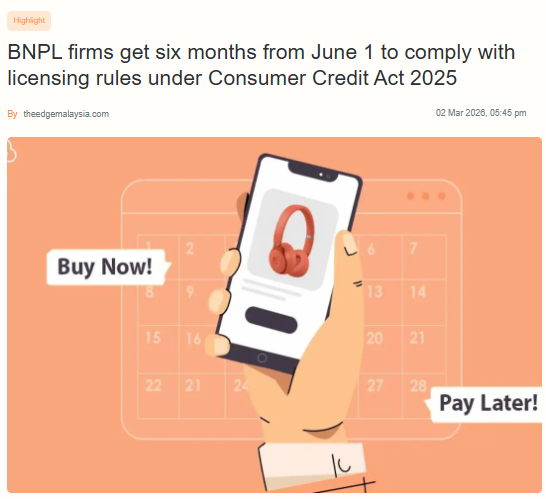
However, the previous absence of a license has never stopped claims of being licensed!
Below, we share exchanges when we reached out to several advertising themselves as “licensed” long before the announcement was ever made.
The ‘MOF License’ claim
Out of the seven debt collectors we messaged as prospects, only one responded to our requests, and initially even they were reluctant to share their license.

Only after multiple requests did they say they held a Ministry of Finance (MOF) license.

While this sounds credible, it only made us more dubious as MOF is not a debt collection regulatory body.
Yes, under the MOF-managed ePerolehan, businesses can obtain an MOF license for debt recovery. However, this license is only meant to allow bidding on government contracts within one's stated scope of services. It does not function as professional certification and cannot be used to indicate the holder meets any specific industry standards.
You can get the same MOF license for thousands of other services including grass-cutting!
At best, calling it a ‘debt collector license’ is inaccurate.
At worst, it could be intentionally misleading given the potential (and incorrect) link creditors can make between ‘debt collection’ and ‘Ministry of Finance’. Remember, under the announcement, it is the Consumer Credit Commission (CCC) that will regulate debt collectors, not MOF.
APDCAM is not a statutory authority
Prior to the CCC license, the closest thing to a regulatory body for debt collectors was the Association of Professional Debt Collection Agency Malaysia (APDCAM).

However, APDCAM is a non-governmental organisation (NGO), not a statutory professional body.

This means it has zero true authority or licensing capability over debt collectors. Membership is optional, and even then, is not the same as being professionally licensed by law.
If it sounds like we're going out of our way to paint debt collectors negatively, let us explain why: Because we care about you!
The dangers of a bad debt collector
The absence of regulation makes it very hard for creditors to distinguish between reputable debt collection agencies and those that have no problem with questionable tactics.

We're not saying all debt collectors are bad, but instead of making your life easier, if a supposedly licensed provider:
harasses a debtor unlawfully
makes defamatory statements
threatens improper action, or
engages in intimidation
You can be held liable - we know because we’ve helped creditors who came to us after their previous debt collector got them in hot water!
Now let’s contrast this with legal practitioners (warning: sections below are unashamedly biased).
Debt recovery law firms
When a legal debt recovery specialist like us says they are ‘licensed in Malaysia’, that license is issued and regulated by the Malaysian Bar Council.

Unlike an NGO like APDCAM, the Bar Council is a statutory body which means:
lawyers cannot practice law unless they are members
admission is governed by statute
practice is subject to professional conduct rules.
there is a disciplinary board.
sanctions include suspension and striking off
the license number is publicly verifiable
This is why instead of vague claims of being ‘licensed’, lawyers display our credentials openly, and we’d be happy to send anyone a copy if they pay for postage 😛
Why creditors choose debt collection agencies over lawyers
As with the client in our case study, many creditors assume lawyers are too expensive to bother with, thinking of the high costs of litigation.
While it’s true litigation is not cheap, it’s a last resort and most debt recovery cases handled by competent lawyers never see a courtroom - we prefer pre-court recovery methods to secure swifter and less messy payments for our clients (and ourselves).
In appropriate cases, lawyers even accept engagements on a no-win no-fee basis, as we have done in the past and may do in future if the situation permits.
'Top 10 debt collection agency' lists
Like Michelin Guides for debt collection, multiple sources claim to know the best debt collectors in Malaysia, often presented as a 'top 10' list.

Unfortunately, if the Michelin Guide is the gold standard, many of these sources have severe shortcomings including:
user generated input including descriptions and services offered
reviewing everything from debt collectors to holiday destinations
requiring payment for placement in the 'top 10' list
This isn't unique to debt collectors - an authoritative and unbiased third party who reviews providers to highlight standout options for customers sounds like a great idea in theory, but in practice is more about which provider is better at marketing themselves and has a bigger budget.
Not to say 'top ten debt collectors lists' are unusable, but they should serve not as the be all end all of a search, but a way to collect names of lawyers and agencies to delve into personally.
Finding a top debt collection agency in Malaysia
As we hope this guide has shown, a debt collector that gives up after one phone call is not very competent, but neither is one that batters down your debtor's front door like a movie star.

Being a professional debt recovery service provider is as much about the legality and ethics of methods employed as it is about successful recovery. Licensing issues notwithstanding, there are absolutely debt collection agencies in Malaysia that fulfil both criteria.
Here are three key steps we advise creditors take to find them.
Check for licenses and professional registration
A lawyer should have no problem sharing their Bar Council number while a debt collection agency should be transparent that there is no specific debt collection license in Malaysia.
Be wary of anyone using general licenses like MOF or PBT premise permits as proof of professional qualification.
Research the company / firm / key employees
Search the company name to see whether they have been involved in any noteworthy cases, news coverage, or disputes. Pay particular attention to social media as posts there are usually more authentic than Google reviews which can be directly curated by the company.
Ask if they have lawyers
If a case escalates and legal action becomes necessary, only a practicing lawyer can file the necessary petitions and represent you in court. Creditors who transition from negotiation to civil litigation will therefore have a smoother experience with agencies that have in-house lawyers.
We did say these later sections would be biased, but we can't help but feel most creditors taking the steps above will find that their ideal debt collection agency is...a debt recovery law firm!
Final thoughts
We do not suggest for a moment that all debt collectors operate unethically. However, until the CCC reigns in what is close to the Wild West, claims of being ‘licensed’ should be carefully examined, and defensive, deflective remarks taken seriously.
Our aim is solely to provide creditors with clarity and make informed decisions 🙂
Let Rule & Co handle your bad debt recovery
If you’ve sent reminders and been ignored or simply don’t want the hassle of chasing payments, Rule & Co is a debt recovery law firm that focuses on helping creditors recover debts via legal strategies that minimise upfront cost, maximise recovery, and protect your reputation.


Comments